Moon Phases

CURRENT MOON

Sunday, February 23, 2014

Journey to the Misty Mountain and Back

There and Back Again: JRR Tolkien and the Origins of the HobbitThere and Back Again: JRR Tolkien and the Origins of the Hobbit by Mark Atherton
My rating: 4 of 5 stars


This book offers probably the most in depth look at the writing of “The Hobbit “ and “Lord of the Rings” Instead of offering the reader another biography of Tolkien, the author goes way behind the scene and offers us a view of what really inspired Tolkien’s writing. Such influences would include literary influences, life time experiences and his interest in philology or the study of languages.

The first two parts of the book kept me glued but the third and final part had me reading on in pain. Way too scholarly at the end, something that perhaps only a linguistic major would appreciate.

To begin with “The Hobbit was first meant to be told a children’s tale. “Roverandon was a tale he came up with in order to comfort a child after losing a toy dog. He would grade papers at Leeds and in his boredom he would draw upon the paper and hence the idea of the Hobbit. The shire of Hobbit’s home was originally inspired by the village in which Tolkien grew up in Sarehol which is near Warwickshire. There are several literary influences for “The Hobbit” Kenneth Grahm’s “Wind in the Willow” provides an inspiration about a Ground hog who lives like Bilbo, in a hole in the ground. “Babbit” is another story of escape where in a man who works in a futuristic boring factory town escapes away with a faery princess and comes back changed. “ The Merry Land of the Snergs” features Hobbit like creatures who are sort of bungling and one of them must save two human being. Besides literatue Tolkien also drew from Norse Literature especially the idea of the ring, the dwarf list came from a work called Volupsa.

Bilbo is put in on chance adventure one which he did not ask for. The dangers takes to Rivendel where there are dragon and elves and sorts of danger. Yet Tolkien has created a world that us unique. It is a well ordered world that believes in faery like beings that could come into a story and change everything around. Tolkien offered forward a definition of a faery story. It was a story in which a man or woman would travel into the world of faery and interact. It was not the same as an animal fable or a travel story. Tolkien considered it a faery story yet it had elements of a travelogue and an animal story. Obviously Bilbo is traveling but in Tolkien’s mythos there are talking animals especially in the History of the Middle Earth Series. You have Tevildo, a talking cat,Huor a speaking hound who fights against Morgoth. Beorn who appears as a shape shifter appears in the Hobbit and he communicates with his animal servants. Beorn could be based on a Norse legend called Bothvi who was a bear warrior that struch up an uneasy alliance with a Norse Kings.

“Not green, great dragons” scolded Mabel Suffield “rather great, green dragons” a correction in grammar but never a challenge as to whether or not dragon existed. Tolkien had a great desire for dragons. Yet he did not want one in his neck of the woods. Tolkien had red and gold dragon in his works but never green ones. Tolkien oft times considerd himself a Hobbit and in the “The Hobbit” Bilbo had a similar longing for dwarves. Tolkien’s main inspiration for dragon came from Norse Mythology and The Red Fairy Book. Dragon were oft to mean green as they always horded their gold

The review can get rather exhaustive so I shall closeout and advise reading the book. I give 4 stars out of 5.


View all my reviews

Friday, February 14, 2014

Carnal Magic

Carnal Alchemy: A Sado-Magical ExplorationCarnal Alchemy: A Sado-Magical Exploration by Crystal Dawn and Stephen Flowers
My rating: 4 of 5 stars

One of the newest trends in the magical world is the practice of sado-magic or BDSM practices in magical operations. In theory it works rather well, for magic to be successful you must visualize you goal, raise the energy and direct it then let your spell go. Sexual and BDSM practices are just one way.

Of course BDSM is nothing really new. Ancient cultures had flogging rites both to purify the soul and raise energy levels . The Greek in their rites to Dionysus and Artwmis are two prime examples. The native Americans practiced piercing and suspension in order to achieve trances . Various Christian orders also practiced flagellation . Most recently it was brought into updated practice by Gerald Gardner and Alesister Crowley .

The author himself belonged to the Order of Triskellion. The order's main purpose was to bring BDSM practices into magical and mainstream acceptability. They have since folded and Robert North has opened up the New Flesh Palladium.

BDSM has extensive history in both Japan and Europe. Flogging or caning is sometimes called the English Vice. In Europe some famous people involved at various periods of time would include Marquise De Sade, Leon Sacher Masocher, Robert North and William Seabrook.

Marquise De Sade was a libertine who believed in developing his imagination. He was also into non consensual torture. Masocher who had a bad experience with an aunt discovered his love for pain. He was also into contracts and agreement. Seabrook practiced bondage and suspension techniques aimed at achieving the trance state. He wrote books about the Middle East and witchcraft.

The book next covers the two types of universes. The subjective is like our dream world and the objective is the physical universe. You can manipulate the objective in order to alter the subjective or manipulate the subjective in order to alter the subjective.

To those experienced in BDSM and magic the safety techniques and the creating of a sacred space will not be ground shaking but to the newbie may well be revolutionary .

Would have been nice to have a few sample rituals to serve as a guideline included. I wonder what deities beside Artemis and Dionysus work well with flagellation and bondage . Perhaps the book could be extended and this information included.

View all my reviews

Thursday, February 6, 2014

The Hidden Jews of Turkey

The Donme: Jewish Converts, Muslim Revolutionaries, and Secular TurksThe Donme: Jewish Converts, Muslim Revolutionaries, and Secular Turks by Marc Baer
My rating: 4 of 5 stars

In the Thracian city of Edirne , a want to be messiah is given a choice, conversion or death. Seems harsh but considering that Sabbtai Tzvi was talking of over taking the Sultan then the penalty seems rather reasonable . The Jewish messiah converted . His followers were in disarray and of those he had many. The mainstream Jewish establishment opposed him for his heretical views and changes to the Jewish religion .

Some Jewish followers returned to the fold. Others converted along with him. Some completely left the fold. Many Ottoman Jews were of Spanish Descent so converting to another religion was deemed an acceptable way to save your life.

Those Jews who converted to Islam and secretly followed his teaching were called the Donme. Outwardly they were Muslims but in private they followed Shanbtai Tvi's teaching in secret. For two hundred plus years the Donme had a twisting and turning history in Turkey.

Alienated from other Jews and quasi excepted by Turkish Muslims the Donmeh were able to carve out a niche for themselves. There were three sects of Donme. The kapnanci, Karakas and Yakubi.

The first two groups of Dinmeh allied themselves with certain school of Sufi Islam. The Kapansi were allied with the Bektashi school. The second Karakas was allied to the Mevlevi school. The Yakubi were unaligned.

The Dinme kept themselves apart from everyone else in the Ottoman Empire. They married amongst themselves, went to their own schools, built their own mosques, had their own graveyards and neighborhoods. The different groups did not even mix with the other groups of Donme.

The Karrakas group openef the Tarraki school. The Kapanci opened their own school called something like Teriket. The schools taught a progressive curriculum of European languages and business acumen. They also taught morals and the values of hard work.

Each group of Dinmeh lived in their own neighborhood. Their style was rich and some what different then the rest of the Turks. Many of the houses were interconnected with underground tunnels. This served for rituals , secret meetings and safety.

The Dinme were not recognized as having their own millet. They were considered Muslims albeit with some suspicion as to how sincere they were. The Dinme had their own mosque with their own variation on Jewish practice and Muslim practice. They also had their own communal leader complete with their own laws and jails. The Turks frowned on such autonomy.

The Dinme became part of Ottoman society , even rising I to high positions of government . They were also successful business people, often times importing tobacco and timber. The Donme were also well travelled.

Their main city of habitation was in Salonica , located on the Grecian part of the Ottoman Empire . In 1909 change was in the air. Many Donme played an active role in Young Turks and their reform. So did the Sufis and the Masons. Many Donme were Masons. The Masons took an active role in helping the Young Turks come to power.

It was during this time that serious suspicions fell upon the Donmeh. The Islamist accused them of promoting immorality and undermining the spirit of Islam. The secularist felt they were not genuine Turks and were trying to undermine the Turkish nation

World War I would bring profound changes for all Ottoman citizens. Armenians and Greeks were massacred. The treaty of Lausanne innaygurated a swap of populations between Greece and Turkey. Muslims to Turkey and Christians to Greece. It was not easy for newcomer and neither side really trusted the Dinme. People were short changed on property exchanged and new comers with different customs were not always welcome with open arm.

The World War II years brought even more negative change. Being Turkish was a racial category. Jews, Donme , Armenian , and Christians were given a wealth tax and forced into conscripted labor. In the end the Dinme were forced to assimilate.

View all my reviews

Friday, January 31, 2014

Thracian Magic...Past and Present

Thracian Magic - Past & PresentThracian Magic - Past & Present by Georgi Mishev
My rating: 5 of 5 stars

Thracians were the original inhabitants of Bulgaria. In fact Bulgaria used to be called Thrace and Thrace was an entity that embraced a vast quantity of land. The original Thracians lived in the mountains while people streamed in from further north to populate the area. The newcomers ended us adapting the Thracian religion and folk way.

The old Thracians revered the Goddess, who was called Hekate and her son the sun god. She gave birth to him and he became her lover. Sounds a lot like Wicca. The Yule time celebrates the birth of the god. It is a holiday that lasts 12 day. The book then proceeds to describe the yearly cycle according to the Thracians. Next is mayday and then holiday popping up in the summer an finally close to Halloween.

Many Bulgarian practices come from the Ancient Thracians and the acceptance of Christianity did not blot them out. THE Church tolerated them as they were part of the culture. I look at this book as a reference for general information. Most of the magical actions in here cannot be performed in this day and age owing to the fact that some of the actions require slaughtering an animal and/or creating a big fire. But they could be modified.

Magic is still practiced in Bulgaria. There are healers who still work and they their job is to heal and help people. Usually they are selected by an older healer and initiated, for women before they begin their period or after they have gone through menopause. Boys are selected before their first sexual encounter. Transference of bestowing of power is given by saliva or blowing on someone. To learn magic one must be selected and taught by a healer or magic worker and the it is a mystery tradition. To merely copy the magic will not be effective. Wo to those who perform ritual without knowing their real meaning. In Bulgaria sometimes the saints are summoned to perform healing and sometimes there is reference to the Ancient Gods.

There are dark magicians who work for their own gain and curse people as well. They are part of the community so they are not completely shunned. Yet the practice is looked down upon. Thracian magic was influenced by the surrounding culture and it influenced the surrounding cultures. if you wish to glimpse into an Ancient Culture this is a great book to read and the end is chocked full of resources, Get it for 6.99 on the kindle and you cannot go wrong.

View all my reviews

Monday, January 20, 2014

Into the Caverns of the Dark One

The Dark Lord: H.P. Lovecraft, Kenneth Grant, and the Typhonian Tradition in MagicThe Dark Lord: H.P. Lovecraft, Kenneth Grant, and the Typhonian Tradition in Magic by Peter Levenda
My rating: 4 of 5 stars

Peter Levenda has done an excellent job of bringing out the points of commonality between Crowley, Lovecraft and Kenneth Grant. It is a massive undertaking and the book is mind blowing. Writing from a detached observers stance Peter Levenda has me convinced that HP Lovecraft was psychically intuned to some astral realm like most of the great magicians were. The points of coincidence between Lovecraft's writing and Crowley's revelation are too much to be ignored.

Starting off with a discussion of Aleister Crowley's Thelema we learn that the world has experienced the aeon dedicated to different Egyptian Deities. According to Crowley we are in the age of Horus. The age of Horus corresponds to that of the child. This is where individual growth takes precedence over following what patriarchal authority tells us what to do. We write our own program so to speak. Horus's twin is Set, in a sense of speaking. According to Egyptology Horus kills Osiris, Horus's father and later on Horus avenges his fathers death. According to Crowley's schema and some other interpretation Set is the other side of Horus. In the old Egyptian myth the two of them get into a nasty fight and basically tear each other apart.

Set though is somewhat different from other Egyptian deities. He has no assigned animal and he is generally thought of as a god of the foreigners. He is the god of the desert wastes, of chaos and of very wanton sexuality. He is in a sense a dark lord. Now Crowley received his revelation in Egypt by a deity or guardian angel named Aiwas. Aiwas can can be compared to Set but the origins of the Dark Lord are going back even further. Kenneth Grant would say all the way back to Sumeria. A discussion ensues on the Sumerian origins with a focus on the yezidi's who Kenneth Grant has devoted a lot to in his works.The yezidis worship Melekh taus or the Peacock God. they believe that he is Satan and and that Satan in end will be redeemed. But are the origins of Melekh Taus really in Sumeria and where did the Sumerians come from. Peacock are not native to Sumeria but rather India.

Tantric Spirituality has made several contributions to Kabballah, Alchemy and Ceremonial Magic. After a long and complex discussion we see that the possible origins for Crowley's Scarlet Queen and the Lord Chaos might be an incarnation of Shiva. The Indian Goddess is colored Red and Shiva is a Lord of Hell and Chaos in the form that brings the most enlightenment to mankind. there is also the concept of Kundalini which rises to the base of our spine which then drops down the amrita or immortality. Of course this is symbolic of Shakti rising to Shiva.Or the serpent rising up. Remember the serpent from the Bible. He enlightens Eve by telling her to eat from the tree of knowledge.

Through out this discussion references to HP Lovecraft's works are brought up. Cthulhu being the most famous of the Old Ones is described as being dead but dreaming and when the stars are right he will arise and as a priest of the old ones he will rise up and open the gates to allow for the Old Ones return. The Old Ones were here before we were and they do have their human followers. In Tantric Operation which can be very sexual there is an importance of doing sex magic at a time when the stars are in the proper position. Phases of the moon determine the spiritual power of human body fluids. The Kundalini Serpent as well lies asleep and dreaming at the base of our spine. Also there are DNA particles of every animal encoded in our cells. Remember evolution.

One of the goals of sex magic is to create a magical child . This child could be a physical child or a spiritual child that is designed to carry out some magical task. By being in the right frame of mind and opening the right spiritual doorways one can bring in the essence of other beings into a physical child and thus bring about a sort of evolution. In HP Lovecraft's writing there is talk of mating with humans and the old ones. In Lovecraft's view the offspring are strange and deformed. Crowley and Grant sorrt of welcomed it and HP Lovecraft feared it.

The analysis will require some background in Kabballah, Ceremonial Magic. Lovecraft and Tantra. Even for someone versed in these it can get confusing. The book is chocked full of material and there were parts that needed to be reread. In the end we come up with a system of magic that Grant could understand and use that was consistent with his psyche. To the objective it may make no sense. Grant also believed that we did in fact open some of those gateways and the world was feeling the effects. Great book!

View all my reviews

Friday, January 17, 2014

WITCHA

Witcha: A Book Of CunningWitcha: A Book Of Cunning by Nathaniel Harris
My rating: 4 of 5 stars

Here comes a book about British Witchcraft coming from someone who has inherited a family tradition and has also at the same time investigated several other traditions across the British landscape. His approach is also down to earth and real. Yet at the same time you may have encountered these ideas before.
Witchcraft is about getting results plain and simple. If it works use it. Magic is not about therapy, transformation or transcendence. So whatever works you use. That means witches can work with Germanic runess, Judeo-Christian psalms all in the same working. One can also call upon the saints, pagan gods and even angels and demons all in the same working.
This work covers the working tools of the witch. Many are the same as Wicca and if you have studied British Witchcraft then you may have come across most of the tools. Of course a witch does not need to have tools as the power of the witch is generated within. The procedures for circle casting and consecrating your tools is simple and straight forward which is what I like about it.
Deosil casting are for building up the positive in our life while widdershins is for negative working. The author does not waste too much time with White and black magic . he feels as do I that it is a matter of personal viewpoint. Cursing is not forbidden as sometimes some people really deserve but he does warn that it can backfire if not worked correctly.
There is a full description of the Sabbats , Lord and Lady and other concepts that might dove tail well with Wicca save for the fat of terminology for the Sabbats and the symbolism for the Lord and Lady is a bit different. The lad gives us insight while the lord gives us strength to move things in our direction.
The author discusses places of power , pharie blood and spell craft. Certain places will have power based on ley lines and /or events that have had something significant happen there. Pharie blood could be a reference to witch blood meaning that only certain people have had the proper genetics to do magic. There is some speculation that faeries mated with humans and created witches of magic power. Witches have communed with faeries and the lord and lady are sometimes called the king and queen of faerie . they are also called the dame and devil. The male god is sometimes Odin or Loki or Cernunnos. The lady can be the Goddess Diana or the Goddess Hekate or the the Goddess Perchta.
The author does make a rather long reference to the runes and gives good explanation on how to use them. He gives an interesting poen that offers his interpretation on them, yet he never once shows you the actual runes. You have to look that up yourself I guess. Towards the end of the book the author give some great songs and invocations for rituals. These will be great towards forming your own tradition. Many of us will not have the opportunity to be initiated into a coven. That is ok not every witch was initiated by another witch and some traditions have your initiate yourself. Enjoyable book that is filled with information and great techniques for magic .


View all my reviews

Tuesday, January 7, 2014

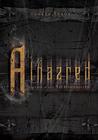
Life of a Mad Sorcerer, Alhazred

Alhazred: Author of the Necronomicon (Necronomicon Series)Alhazred: Author of the Necronomicon by Donald Tyson
My rating: 4 of 5 stars

I totally loved this book and for several reasons. First off the author has done his research on the Middle East. He put Alhazred's story back into it's proper context. The Mad Arab grew up and experienced his adventures in the Middle East so it is only proper that Egyptian Gods, Jinn, Ghoul's , Indian Thuggies and sultans play a part with the ever present spectre of the Old ones hidden in the background just outside of everyone's view.

The story starts off in Yemen when Alhazred, the kings poet , falls in love with Narissa, the King's daughter. They have an illicit affair that ends up with her getting pregnant. After they get caught the king of Yemen mutilates Alhazred's face, castrates him and leaves him to die in the Empty Quarter. But Alhazred is resourceful and he survives instead of dying. During his desert journey's he befriends a tribe of ghouls, makes friends with a female jinn and steals from caravans that which he needs in order oreto survive. After his tenure with the ghouls, who by the way die from poison, Alhazred wanders to the lost city of Irem or Ubar. Itn is there that he confronts a witch and learns the history of the old ones. After leaving the desert with numerous jewels he makes his way Egypt going through such cities as Bubastis, Babylon and Alexandria. It is in Egypt that he meets with Martala and makes enemies with Farri, s street thug.Farria and thugs follow Alhazred through Egypt and do not stop until he is killed for the first time. In Egypt he also steals a scroll to summon the Old ones which angers a group called the Order of the Sphinx. In a fight with this order he is infected with a poison that will kill him in days unless he finds the cure.

Months after his first death he wakes up in Alexandria, Egypt. In possession of what he needs he makes his way to Mesopotamia.It is there that he finds a garden paradise and tries to find the Well of Seraph in Vain hopes that this will rest his damaged body. His hopes are dashes. Constantly evading the Order of the Sphinx he travels with Thuggees to Damascus where he befriends a group of Necromancers in Damascus. But all is not well as the Caliph wishes to kill the Necromancers. In the end magic is not a salvation but always the good old fashion sword that comes to aid.

Through out his travels Alhazred is bothered in his dreams by Nyalathotep , the dark one. In this take we come across several deities from Cthulhu mythos. Like I mentioned earlier this one puts us in the Middle East. Yet it lacks the same imaginary frightfulness of Lovecraft's writing


View all my reviews

Baba-Sali

Baba-Sali
Holy Morroccan Sage engaged in Prayer

Blog Archive

About Me

One blond hair blue eyed Calfornian who totally digs the Middle East.